

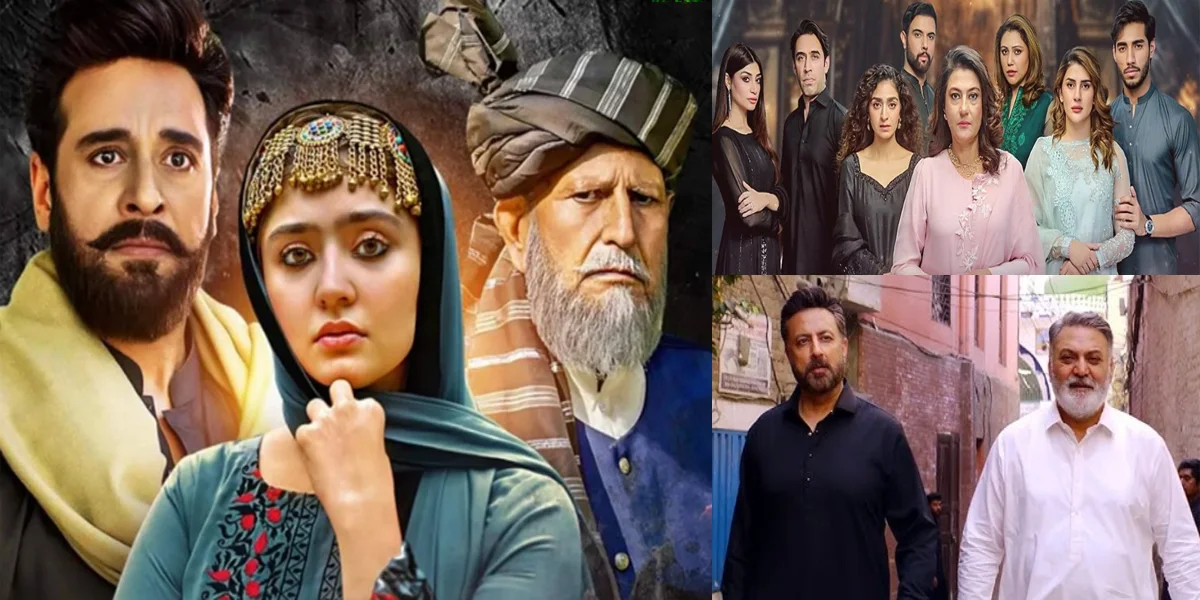
In recent years, the world of Pakistani dramas has undergone a noticeable shift. Once dominated by romance, social issues and confined family settings, many serials now thrust viewers into sprawling sagas of inter-clan conflict, vendettas, heritage feuds, and generational enmities. These family rivalry stories have quickly become a defining trait of modern Pakistani television, and the trend shows no sign of slowing down. For the global audience of Pakistani dramas whether in South Asia or within the Pakistani diaspora the shift has been a double-edged sword: thrilling and novel on the one hand; repetitive and formulaic on the other.
If one were to trace the trajectory, troubles begin when a successful formula emerges. Pakistani drama makers, keen to capture high TRPs (television rating points) and massive YouTube views, often replicate what works. The familiar tropes of love triangles, “saas-bahu” (mother-in-law / daughter-in-law) feuds, joint-family chaos have long dominated the airwaves. But now a new trope is taking centre stage: big-scale family rivalries between warring households or clans. These are not merely the jealous mother-in-law or the scheming sister-in-law; they are extended feuds, bloodlines pitted against one another, generations of bad blood, wealth, power and legacy all colliding.
The question naturally arises: why are family rivalry stories dominating Pakistani dramas today? On one level, they provide high-stakes drama, conflict, clear “us vs them” narratives and thus draw viewers in. The spectacle of a feud gives the audience something larger than the everyday; it elevates interpersonal conflict into clan war, mirrors ancient tribal stories. On another level, it reflects shifts in Pakistani society: joint families breaking down, generational gaps widening, tradition vs modernity, local power dynamics within rural and urban settings. Studies of Pakistani dramas suggest that family relationships get portrayed more negatively now than before. The medium is picking up on social anxieties and dramatizing them through feudal-style rivalries.
In this blog post, we explore why these family rivalry plots are so prevalent in the world of Pakistani dramas today, and then we dive into several specific examples where the formula has been applied with success (or overuse). Our focus keyword “Pakistani dramas” will appear throughout, helping to underscore how the industry is both evolving and repeating patterns. We’ll examine the mechanics of these rivalries, their appeal, and also question their effect on storytelling quality. Then we’ll look in detail at specific dramas: Khaie, Dunyapur, Noor Jahan, Main Manto Nahi Hoon, Sanwal Yaar Piya, and Main Zameen Tu Aasman. By seeing how each uses the family-rivalry template, we can better understand both the innovation and the repetition in modern Pakistani dramas.
Why Family Rivalry Stories Are Trending in Pakistani Dramas
High stakes and visual spectacle
One reason family rivalries have become so dominant in Pakistani dramas is that they provide instant stakes. Two families at war? There are livelihoods, legacies, land, reputation, violence, blood ties all kinds of dramatic fuel built-in. Unlike simpler conflicts (e.g., husband-wife or parent-child), these rivalries span generations, create multiple protagonists and antagonists, and allow for extended conflict arcs. For Pakistani drama makers, this offers more content: long-running feuds, flashbacks, vendettas, shifting allegiances. Social media audiences can latch on to “which family will win”, “who betrayed whom”, “which generation takes revenge”.
Furthermore, these rivalry plots often come with strong visual and setting cues: mansions, estates, tribal areas, rural feuds, gunshots, revenge scenes, big-budget sequences. According to a recent article, one Pakistani drama featuring “two warring families … locked in a bloody feud” was described as “Pakistan’s most expensive drama due to its top-tier production value”. Such spectacles appeal not only to domestic audiences but to a global diaspora that consumes Pakistani dramas online and seeks engaging visuals.
The formulaic nature and viewer familiarity
Once one or two dramas hit big using the family rivalry template, the formulaic reproduction begins. Pakistani drama producers are under pressure: lots of channels, multiple time-slots, digital platforms, YouTube views. Replicating what worked becomes tempting. The problem is that quality begins to suffer. As you noted, “once a certain formula is a hit … all the stories start following that pattern to achieve high TRP and YouTube views.” This applies to Pakistani dramas in general, and specifically to the family rivalry trope. The result: many dramas feel overly familiar, predictable. Social media viewers increasingly call out repetitive storylines. For example, some research indicates that Pakistani dramas now tend to portray family relationships more negatively, with crises and conflict being the dominant mode.
Reflecting social change and viewer anxiety
Another underlying reason is that Pakistani dramas are reflecting social change and perhaps the unease that comes with it. The joint-family system is under pressure, younger generations want independence, rural power structures and feudal legacies persist. The trope of two large families locked in conflict resonates with tensions around class, land, patriarchal authority, tradition vs modernity. An article discussing Pakistani dramas of 2024, for instance, discussed how “intense ‘rivals to lovers’ storylines” played into this dynamic.
Moreover, as one piece observed, Pakistani television is starting to depict the joint family system not just as ideal, but as conflicted, even “toxic”. The family rivalry plots are thus the dramatic manifestation of larger fault-lines in Pakistani society: power, honour, legacy, gender, class and modernity.
READ MORE: Top 10 All-Time High Rated Pakistani Dramas You Must Watch
Economic and distribution incentives
From a business perspective, family rivalry stories have some advantages for the Pakistani drama industry. They often span many episodes, which means longer runs, more advertising, more digital monetisation (YouTube views). They generate social media engagement (“which clan will win?”, “that betrayal scene!”, “who sided with whom?”). They are shareable. They also allow for big casts, multiple storylines, and thus greater audience segmentation: older viewers may latch to the generational feud, younger ones to the romance spun off that war. For Pakistani dramas that aim at diaspora markets, the cultural specificity yet universal themes of family rivalry work well.
Detailed Look at Individual Pakistani Dramas
Here we examine how specific Pakistani dramas employ the family rivalry formula, why they resonated (or didn’t), and what we can learn from them.
Khaie
This drama stands out as one of the early successes of the family-rivalry model in Pakistani dramas. Written by Saqlain Abbas and directed by Syed Wajahat Hussain, Khaie is described as “bloody, … made realistic … from casting to performances, everything went right.” According to the writer of the prompt, “The whole country followed the family rivalry between Chinar Khan and Zamda, and fans were on the edge of their seats throughout the show’s phenomenal run.”
In Khaie, the feud is front and centre. Two families are at war, not simply for a love-triangle or property dispute, but for power and legacy. This is exactly the kind of high-stakes rivalry that captures attention. For Pakistani drama viewers, Khaie offered something fresh: the scale of the feud, the rural and perhaps feudal setting, characters not just born into conflict but raised for it. Because the conflict is multi-generational, the show had room for arcs of vengeance, betrayal, shifting alliances, and dramatic layers—more than a simple romance or domestic squabble.
The success of Khaie, as noted, appears to have “injected this new idea of family rivalries into our drama writing.” When a Pakistani drama hits a chord and dominates TRPs or trending charts, other producers take notice. Thus, Khaie arguably served as a benchmark: if a drama about two rival families can work, let’s replicate. But replication brings risk: the very freshness that Khaie had may fade when many dramas follow the same template.
Dunyapur
Another major Pakistani drama example. Described as “big-budget”, aired on Green TV, Dunyapur was built around the rivalry between the Adam and Nawab clans. The three generations of these two families were entangled in a full-scale war “killing each other off.” A romantic track sits alongside the violence and feud. According to commentary, this show “has already developed such a strong fan base on social media … because netizens can’t get enough of the chemistry sparking whenever these two are having a confrontation.”
What makes Dunyapur notable in the context of Pakistani dramas is that the rivalry is not merely background—it drives the story. The romantic subplot (between Shahmeer and Anaa) is embedded inside the feud, not separate from it. The conflict bleeds into every scene. The stakes are inheritance, legacy, honour. For viewers of Pakistani dramas, this is compelling: you have the familiarity of romance, but the novelty of clan warfare. And for producers, a big-budget production means they can visualise the rivalry on a grander canvas: bloodshed, posh houses, families with power, and hence more spectacle.
However, this raises questions. While Pakistani dramas enjoyed fresh energy in Dunyapur, the underlying pattern is still replicative: two families, a feud, star-cast romance, big production. As more dramas adopt this, the measure of “freshness” diminishes. Also, some viewers may feel the realism drops when the feud gets overly theatrical.
Noor Jahan
The Pakistani drama Noor Jahan is described as appearing at first like a typical “saas-bahu” story, but it evolves into something more: a family rivalry between Noor Jahan’s father and Noor Bano’s father, which then transcends two generations. This kind of layered feuding one generation’s conflict causing ripple-effects into the next—is a common trope in Pakistani dramas now. It offers the opportunity to show how trauma, vendetta and legacy persist.
For Pakistani drama viewers, Noor Jahan offers both familiarity (family politics, in-law issues) and a twist: that the root of the conflict is not typical marital discord but a deep-seated generational rivalry. It allows for explorations of how histories haunt the present, how characters carry the weight of their fathers’ fights. For producers, this formula allows many episodes: flashbacks, generational shifts, multiple protagonists. For fans, the “which family will win?” narrative provides intrigue.
But the danger here again common in Pakistani dramas is that the feuds become so big that characters lose nuance and the story becomes a repetitive loop of “revenge, betrayal, reconciliation, new betrayal.” The innovation lies in the initial premise; the risk lies in its repetitions.
Main Manto Nahi Hoon
Currently airing on ARY Digital (as of the data in the prompt), this Pakistani drama features a huge star cast and is built around a clan rivalry: the Amritsari and Binyamin families. The family rivalry is what hooked fans, with viewership skyrocketing when the rivalry track dominated, but dropping somewhat as the show detoured into a romance track. The prompt mentions: “Views and ratings were skyrocketing with the family rivalry plot, … that is something fans wanted to see more of.”
What this suggests for Pakistani dramas is that the rivalry formula still works especially strongly in the early phases of a show. When the feud is central and tensions high, audience engagement tends to be high. Once the story shifts focus (e.g., to romance or side plots), the pull may weaken. For drama producers, this offers a lesson: keep the rivalry alive, don’t dilute with too many detours. For audiences, it signals a hunger for conflict, for landscapes of power, rather than just interpersonal domestic issues.
Sanwal Yaar Piya
One of the most anticipated Pakistani dramas of the season (as per the prompt), Sanwal Yaar Piya features leads like Ahmed Ali Akbar, Feroze Khan and Durefishan Saleem. The central conflict is a family rivalry between the clans of Aliyar and Piya. The fathers share a criminal past and parted on bad terms; Sanwal enters the equation as the chain linking the past rivalry to the present. The prompt says: “The drama is getting good numbers on both TRP charts and YouTube…the main conflict … will be the family rivalry.”
Here again we see key patterns of the family rivalry trope in Pakistani dramas: feudal or criminal legacies, inter-family revenge, a younger generation forced into conflict, love interest as a catalyst between clans. For Pakistani drama watchers, this provides dramatic tension plus star-power. For producers, this is a tried-and-tested formula packaged with big names. It speaks of how the family rivalry model is now pre-packaged in new Pakistani dramas: big name cast, clan feud, romantic entanglement, high production value.
Main Zameen Tu Aasman
Also airing on Green TV, this Pakistani drama brings together Feroze Khan and Hiba Bukhari for the first time. The writer (Abdul Khaliq Khan) is known for prior success. Once again, the story uses the rivalry between two families with opposing philosophies of life. The protagonists fall in love, but must overcome the family rivalry of principles to be together. Thus it blends romance with the feud-template. The worry, of course, is how long the “family rivalry of principles” can sustain a long serial without turning into repetitive conflict.
For the broad landscape of Pakistani dramas, Main Zameen Tu Aasman shows how the family rivalry trope is being adapted into both urban/rural and mid-class/upper-class settings, into love stories, into philosophies and values, not just land-feuds. The appeal is that it gives two seemingly divergent worlds a reason to clash, and for romance to heal or overcome it.
Why Audiences Are Still Watching These Rivalry-Filled Pakistani Dramas
From a spectator viewpoint, the popularity of family‐rivalry Pakistani dramas can be explained by several factors:
- Relatability through scale: Even when the setting is extreme (wealthy feud, rural clan war), viewers recognise the base elements: family honour, generational legacy, sibling rivalry, parental expectations. These themes are deeply embedded in Pakistani culture.
- Escapism with conflict: Viewers often seek drama that transports them beyond everyday life; a home conflict or small betrayal may not feel big enough. A clan feud feels epic, cinematic, high-stakes.
- Social media engagement: Scenes of confrontation between clans, betrayals, power plays are shareable on social media. When a show becomes trending, it pulls more viewers. The family rivalry frame helps generate hype (who sided with whom, who will take revenge next).
- Longevity & binge potential: Rivalry arcs allow stories to stretch over many episodes, involve multiple characters, subplots, flashbacks. For Pakistani dramas that run for 30-50+ episodes, this is useful.
- Diaspora appeal: For Pakistanis abroad, watching family feud dramas can feel familiar yet different it evokes cultural memory but also offers drama that is not just “marriage problems in Karachi”; it is bigger, more dramatic.
Cautions for Writers and Producers of Pakistani Dramas
Given the proliferation of family rivalry stories in Pakistani dramas, the following cautions are worth noting:
- Maintain character nuance: When families are in war, it’s easy to reduce characters to “villains” and “victims”. Pakistani dramas will do better when they bring complexity why did the feud start? What are the internal contradictions?
- Avoid dragging the conflict too long: A feud that lasts 120 episodes with no progression becomes tiresome. Pakistani drama creators should plan arcs: escalation, turning points, resolution.
- Balance rivalry with meaningful themes: A fight for power alone may not sustain interest. Tie it to themes of class, honour, gender, societal change. Some Pakistani dramas have started doing this.
- Avoid formula fatigue: Since many Pakistani dramas are using this template, innovation is key perhaps shifting settings (urban vs rural), blending genres (thriller, crime, romance), or limiting the revenge elements.
- Reflect societal change responsibly: Given studies show Pakistani dramas influence viewers’ perceptions of family relationships. If you keep showing family as constant conflict, the medium may reinforce negative stereotypes. Writers should consider balance.
In short, the dominance of family rivalry stories in Pakistani dramas is both understandable and inevitable, given the commercial, cultural and narrative conditions. They offer high stakes, visual spectacle, extended arcs and cross-generational conflict. They reflect changes in Pakistani society and provide global audiences with dramatic, shareable content.
The examples above Khaie, Dunyapur, Noor Jahan, Main Manto Nahi Hoon, Sanwal Yaar Piya, Main Zameen Tu Aasman show how this formula has been applied, each with its own tweaks. For viewers of Pakistani dramas, these shows deliver the ambition and scale that many older family-serials lacked. For producers, they are commercially viable.
But the risk is real: repetition, loss of nuance, formula fatigue, and negative portrayals of family systems. The challenge going forward for Pakistani dramas is to keep innovating within the rivalry framework offering new settings, fresh characters, unpredictable outcomes, and deeper themes. When done well, family rivalries can elevate the medium; when done poorly, they can drag it down into clichés.
If you like, I can analyse more Pakistani dramas (beyond the ones listed) that follow the rivalry trope, and provide a breakdown of how each succeeds (or fails). Would you like me to do that?
READ MORE: Top 10 Blockbuster Dramas of Nauman Ijaz Every Fan Should Watch